
How a Tissue Paper Napkin Making Machine Works — Step by Step
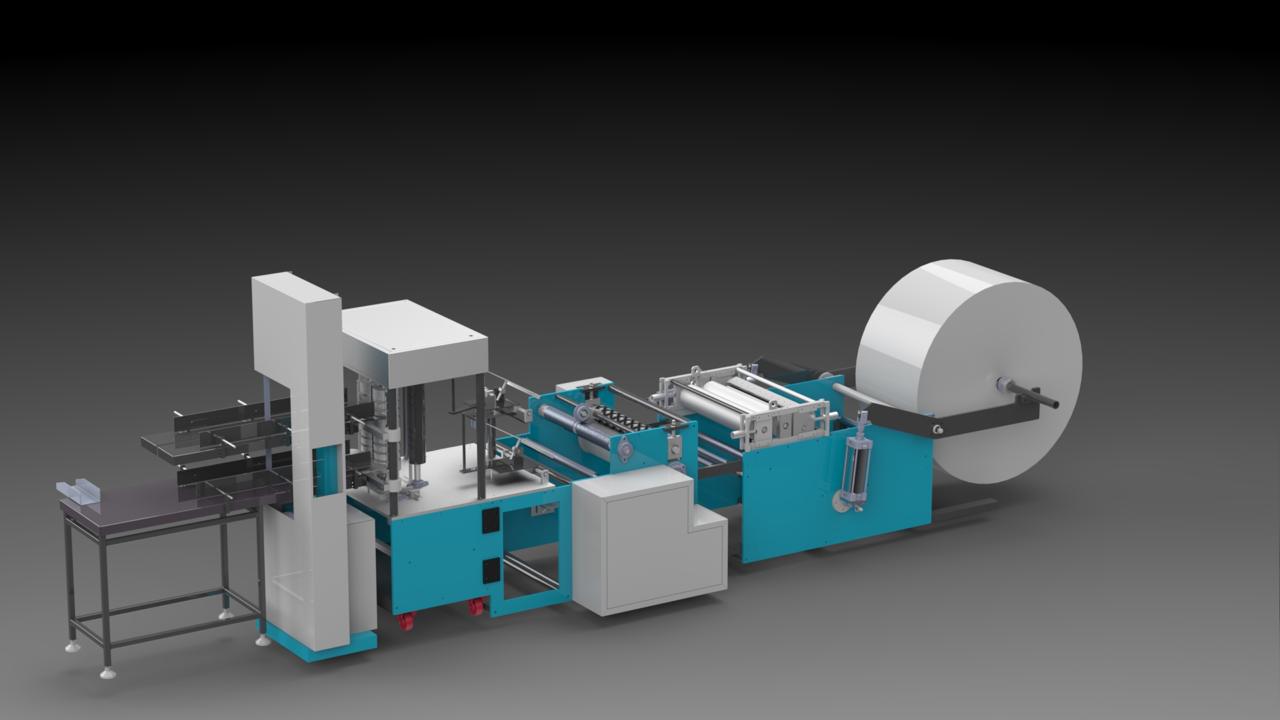
If you are planning to start a napkin business, it helps to understand exactly how a tissue paper napkin making machine turns a plain roll of tissue paper into neat, folded napkins. The process is simpler than it looks — one operator loads the paper, and the machine does the rest. Below is the full step-by-step process, the raw material it uses, and the main parts of the machine.
The raw material: one jumbo tissue roll
The only raw material you need is a jumbo roll of tissue paper — a large reel of thin paper, usually between 13 and 40 GSM, made from virgin or recycled pulp. One jumbo roll feeds the machine continuously and is converted directly into thousands of finished napkins. The paper colour, softness and GSM you choose decide the final napkin quality.
The step-by-step process
1Unwinding the jumbo roll
The jumbo tissue roll is mounted on the machine and unwound at a steady, controlled tension. Smooth unwinding is important — it keeps the paper flat and prevents tearing at high speed.
2Embossing (the soft textured feel)
The paper passes through embossing rollers that press a pattern into it. This is what gives a napkin its soft, thick, textured feel and holds the plies together. Rajshree machines offer double embossing for a richer finish.
3Printing (optional — for branded napkins)
If you want branded napkins for cafés, hotels or restaurants, the paper next passes through a printing unit that applies your logo or design. With double printing you can print in more than one colour. This step is optional — you can also make plain napkins.
4Folding
The paper is then folded into the napkin shape — quarter fold, or other fold patterns depending on the model. The folding unit works in perfect time with the paper feed so every napkin is folded the same way.
5Cutting to size
A precision cutting unit cuts the folded paper to the exact napkin size — from 22×22 cm up to 30×33 cm depending on the model. This is the step that sets the finished napkin dimensions.
6Counting and stacking
Finally the machine counts the napkins and stacks them in neat, even bundles — ready for an operator to collect and pack. Accurate counting means every pack you sell has the right number of napkins.
The main parts that control quality
- PLC + HMI control — a touch screen where the operator sets size, speed and count; the machine runs automatically to those settings.
- Embossing unit — decides the softness and texture.
- Printing unit — for your brand napkins.
- Folding & cutting units — decide the fold and the exact size.
- Speed drive — from 300 napkins per minute on a starter machine up to 1200 per minute on the high-speed Double Dakar series.
On advanced CNC models you also get a mobile phone application and Wi-Fi remote monitoring, so you can check production and get support without standing at the machine.
How many people are needed to run it?
Because the process is automatic, most napkin machines need only one or two operators — one to load jumbo rolls and watch the control screen, and one to collect and pack the finished napkins. This low labour requirement is one reason a napkin unit is a popular small business.
Frequently asked questions
How does a tissue paper napkin making machine work?
It unwinds a jumbo tissue roll, embosses a texture, optionally prints a design, folds the paper, cuts it to size, then counts and stacks the finished napkins — all automatically in one line.
What raw material is used to make paper napkins?
A jumbo roll of tissue paper (virgin or recycled), usually 13 to 40 GSM. One roll feeds the machine continuously.
How many napkins can it make per minute?
From about 300 per minute on a starter machine up to 1200 per minute on the high-speed Double Dakar series.
Which sizes can it make?
From 22×22 cm up to 30×33 cm, depending on the model. Single-size, multi-size and all-size machines are available.
Can it print and emboss napkins?
Yes — double embossing for the soft texture, and optional double printing for branded napkins.
Want to start your own napkin business?
Tell us your product, sizes and budget — we'll recommend the right machine and share the price.
Get Machine Details & Price